












<?xml version="1.0" encoding="UTF-8"?>
<authors type="array">
  <author>
    <author-bio>Marguerite Duras was born in Giadinh, Vietnam (then Indochina) to French parents. During her lifetime she wrote dozens of plays, film scripts, and novels, including &lt;i&gt;The Ravishing of Lol Stein&lt;/i&gt;, &lt;i&gt;The Sea Wall&lt;/i&gt;, and &lt;i&gt;Hiroshima, Mon Amour&lt;/i&gt;, and was associated with the nouveau roman (or new novel) French literary movement. Duras is probably most well known for &lt;i&gt;The Lover&lt;/i&gt;, an autobiographical work that received the Goncourt prize in 1984 and was made into a film in 1992. She died in Paris in 1996 at the age of 81.</author-bio>
    <author-photo>/images/marguerite_duras.jpg</author-photo>
    <created-at type="datetime">2008-03-17T12:42:10-07:00</created-at>
    <first-name>Marguerite</first-name>
    <id type="integer">7</id>
    <last-name>Duras</last-name>
    <name-for-images>duras</name-for-images>
    <updated-at type="datetime">2008-03-17T19:11:33-07:00</updated-at>
  </author>
  <author>
    <author-bio>Macedonio Fern&amp;aacute;ndez is considered one of the greatest Argentine writers of the twentieth century. He was a close friend of Jorge Luis  Borges, and Macedonio's metaphysical and aesthetic ideas greatly influenced Borges's generation. The mythical life of Macedonio is almost as interesting and fun as his books. Some of the stories about his life include: his campaign for president, which consisted of leaving notecards with the word "Macedonio" on them throughout Buenos Aires' caf&amp;eacutes; his attempt to found a utopian society, only to be thwarted by pesky mosquitoes; and his belief that he shouldn't publish, instead allowing his work time to "age." He passed away in 1952, and the first edition of &lt;em&gt;Museo de la Novela de la Eterna&lt;/em&gt; was released in 1967.</author-bio>
    <author-photo>/images/macedonio_fernandez.jpg</author-photo>
    <created-at type="datetime">2009-05-13T11:09:47-07:00</created-at>
    <first-name>Macedonio</first-name>
    <id type="integer">16</id>
    <last-name>Fern&#225;ndez</last-name>
    <name-for-images>fernandez</name-for-images>
    <updated-at type="datetime">2009-05-13T11:22:28-07:00</updated-at>
  </author>
  <author>
    <author-bio>Rubem Fonseca is considered one of Brazil&#8217;s most influential writers, and was awarded the Pr&amp;eacute;mio Cam&amp;otilde;es&amp;mdash;considered the Nobel Prize of Portuguese language literature&amp;mdash;for his body of work in 2003. That same year he was awarded the Juan Rulfo Prize. He is the author of eight novels, including &lt;i&gt;High Art&lt;/i&gt;, &lt;i&gt;Vast Emotions and Imperfect Thoughts&lt;/i&gt;, and &lt;i&gt;Bufo &amp; Spallanzani&lt;/i&gt;, all of which have been published in English translation. One of his famous characters is Mandrake, a cynical and amoral lawyer and the basis for an HBO series.</author-bio>
    <author-photo>/images/rubem_fonseca.jpg</author-photo>
    <created-at type="datetime">2008-03-17T12:38:57-07:00</created-at>
    <first-name>Rubem</first-name>
    <id type="integer">6</id>
    <last-name>Fonseca</last-name>
    <name-for-images>fonseca</name-for-images>
    <updated-at type="datetime">2008-04-04T07:18:25-07:00</updated-at>
  </author>
  <author>
    <author-bio>Ri&amp;#269;ardas Gavelis was a prose writer and playwright. He published his first book&amp;mdash;a collection of short stories entitled &lt;i&gt;The Celebration That Has Not Begun&lt;/i&gt;&amp;mdash;in 1976 and went on to write six novels, three collections of stories, and several plays before passing away in 2002. His other novels include &lt;i&gt;Seven Ways to Commit Suicide&lt;/i&gt;, &lt;i&gt;The Last Generation of People on Earth&lt;/i&gt;, and &lt;i&gt;The Life of Sun-Tzu in the Sacred City of Vilnius&lt;/i&gt;. This is his first novel to be published in English.</author-bio>
    <author-photo>/images/ricardas_gavelis.jpg</author-photo>
    <created-at type="datetime">2008-03-17T12:46:00-07:00</created-at>
    <first-name>Ri&#269;ardas</first-name>
    <id type="integer">8</id>
    <last-name>Gavelis</last-name>
    <name-for-images>gavelis</name-for-images>
    <updated-at type="datetime">2008-12-18T14:36:38-08:00</updated-at>
  </author>
  <author>
    <author-bio>Jan Kjaerstad made his debut as a writer in 1980 with a short story collection, &lt;i&gt;The Earth Turns Quietly&lt;/i&gt;. The three books making up the Wergeland trilogy&amp;mdash;&lt;i&gt;The Seducer&lt;/i&gt;, &lt;i&gt;The Conqueror&lt;/i&gt;, and &lt;i&gt;The Discoverer&lt;/i&gt; (forthcoming from Open Letter in 2009)&#8212;have achieved huge international success, and led to Kjaerstad receiving the Nordic Prize for Literature in 2001. He has also received Germany&#8217;s Henrik Steffen Prize for Scandinavians who have significantly enriched Europe&#8217;s artistic and intellectual life. </author-bio>
    <author-photo>/images/jan_kjaerstad.jpg</author-photo>
    <created-at type="datetime">2008-03-17T10:55:09-07:00</created-at>
    <first-name>Jan</first-name>
    <id type="integer">4</id>
    <last-name>Kj&#230;rstad</last-name>
    <name-for-images>kjaerstad</name-for-images>
    <updated-at type="datetime">2008-12-18T14:36:06-08:00</updated-at>
  </author>
  <author>
    <author-bio>Ilja Leonard Pfeijffer is a poet, novelist, literary critic, and former Ancient Greek scholar at Leiden University. The winner of numerous prizes&amp;mdash;he's the only Dutch author to have won both of the most coveted debut poetry and prose prizes in the Netherlands&amp;mdash;Pfeijffer is the editor of the literary journal &lt;em&gt;De Revisor&lt;/em&gt; and founder and editor of the poetry journal &lt;em&gt;Awater&lt;/em&gt;. &lt;em&gt;Rupert: A Confession&lt;/em&gt; is his first novel to be translated into English. </author-bio>
    <author-photo>/images/ilja_leonardpfeijffer.jpg</author-photo>
    <created-at type="datetime">2008-12-15T12:56:16-08:00</created-at>
    <first-name>Ilja</first-name>
    <id type="integer">13</id>
    <last-name>Leonard Pfeijffer</last-name>
    <name-for-images>pfeijffer</name-for-images>
    <updated-at type="datetime">2008-12-15T12:56:16-08:00</updated-at>
  </author>
  <author>
    <author-bio>Jakov Lind (1926&#8211;2007) was born Heinz Jakov Landwirth in Vienna in 1927 to an assimilated Jewish family. Arriving in the Netherlands as a part of the Kindertransport in 1939, Lind survived the Second World War by fleeing into Germany, where he disguised himself as a Dutch deckhand on a barge on the Rhine. Following the war, he spent several years in Israel and Vienna before finally settling in London in 1954. It was in London that he wrote, first in German and later in English, the novels, short stories, and autobiographies that made his reputation, including his masterpieces: &lt;em&gt;Landscape in Concrete&lt;/em&gt;, &lt;em&gt;Ergo&lt;/em&gt; (forthcoming from Open Letter), and &lt;em&gt;Soul of Wood&lt;/em&gt;. Regarded in his lifetime as a successor to Beckett and Kafka, Lind was posthumously awarded the Theodor Kramer Prize in 2007.</author-bio>
    <author-photo>/images/jakov_lind.jpg</author-photo>
    <created-at type="datetime">2008-12-12T17:02:37-08:00</created-at>
    <first-name>Jakov</first-name>
    <id type="integer">10</id>
    <last-name>Lind</last-name>
    <name-for-images>lind</name-for-images>
    <updated-at type="datetime">2008-12-12T17:02:37-08:00</updated-at>
  </author>
  <author>
    <author-bio>Andreas Maier was born in Bad Nauheim outside Frankfurt in 1967. In addition to winning the Ernst Willner Prize at the Ingeborg Bachmann Literary Competition in Klagenfurt, Austria, in 2000, he received the J&#252;rgen Ponto Foundation's Literary Support Prize and the Aspekte Literary Prize for his first novel, &lt;em&gt;W&#228;ldchestag&lt;/em&gt;.</author-bio>
    <author-photo>/images/andreas_maier.jpg</author-photo>
    <created-at type="datetime">2009-12-21T13:08:19-08:00</created-at>
    <first-name>Andreas</first-name>
    <id type="integer">19</id>
    <last-name>Maier</last-name>
    <name-for-images>maier</name-for-images>
    <updated-at type="datetime">2009-12-21T13:08:19-08:00</updated-at>
  </author>
  <author>
    <author-bio>Quim Monz&#243; was born in Barcelona in 1952. He has been awarded the National Award for fiction, the City of Barcelona Award for fiction, the Prudenci Bertrana Award for fiction, the El Temps Award for best novel, the Lletra d'Or Prize for the best book of the year and the Catalan Writers' Award; he has been awarded Serra d'Or magazine's prestigious Critics' Award four times. He has also translated numerous authors into Catalan, including Truman Capote, J.D. Salinger, and Ernest Hemingway.</author-bio>
    <author-photo>/images/quim_monzo.jpg</author-photo>
    <created-at type="datetime">2009-12-21T13:52:31-08:00</created-at>
    <first-name>Quim</first-name>
    <id type="integer">23</id>
    <last-name>Monz&#243;</last-name>
    <name-for-images>monzo</name-for-images>
    <updated-at type="datetime">2009-12-21T13:52:31-08:00</updated-at>
  </author>
  <author>
    <author-bio>Elsa Morante (1912&#8211;1985) was an Italian novelist, short story writer, and poet. She began writing short stories in the 1930s, and her first book, a collection of short stories, was published in 1941, the same year she married the prominent Italian author Alberto Moravia. In the Second World War, Moravia's anti-fascist reputation forced the couple to flee German-occupied Rome, and it was during this time, hidden away in the mountains, that Morante began to write her first novel, &lt;em&gt;House of Liars&lt;/em&gt;. Morante was not a prolific writer; she would complete only three more major works during her lifetime, including her most famous work, &lt;em&gt;History&lt;/em&gt;. In 1957, she won the Premio Strega for &lt;em&gt;Arturo&#8217;s Island&lt;/em&gt;, and her final novel, &lt;em&gt;Aracoeli&lt;/em&gt;, earned her the Prix M&amp;eacute;dicis &amp;eacute;tranger in 1985, the year of her death.</author-bio>
    <author-photo>/images/elsa_morante.jpg</author-photo>
    <created-at type="datetime">2008-12-15T11:53:57-08:00</created-at>
    <first-name>Elsa</first-name>
    <id type="integer">11</id>
    <last-name>Morante</last-name>
    <name-for-images>morante</name-for-images>
    <updated-at type="datetime">2008-12-15T11:53:57-08:00</updated-at>
  </author>
  <author>
    <author-bio>Bragi &amp;Oacute;lafsson was born in Reykjavik, and is most well known for playing in Bj&amp;ouml;rk&#8217;s first band, The Sugarcubes. He is the author of several books of poetry and short stories, and four novels, including &lt;i&gt;Time Off&lt;/i&gt;, which was nominated for the Icelandic Literature Prize in 1999 (as was &lt;i&gt;The Pets&lt;/i&gt;), and &lt;i&gt;Party Games&lt;/i&gt;, for which Bragi received the DV Cultural Prize in 2004. His most recent novel&amp;mdash;&lt;i&gt;The Ambassador&lt;/i&gt;&amp;mdash;was a finalist for the 2008 Nordic Literature Prize and received the Icelandic Bookseller's Award as best novel of the year. Bragi is also one of the founders of the publishing company Smekkleysa (Bad Taste), and has translated Paul Auster's &lt;i&gt;The Glass City&lt;/i&gt; into Icelandic.
</author-bio>
    <author-photo>/images/bragi_olafsson.jpg</author-photo>
    <created-at type="datetime">2008-03-17T12:28:20-07:00</created-at>
    <first-name>Bragi</first-name>
    <id type="integer">5</id>
    <last-name>&#211;lafsson</last-name>
    <name-for-images>olafsson</name-for-images>
    <updated-at type="datetime">2008-12-18T14:36:59-08:00</updated-at>
  </author>
  <author>
    <author-bio>Ilya Ilf (1897&#8211;1937) and Evgeny Petrov (1903&#8211;1942) were the pseudonyms of Ilya Arnoldovich Faynzilberg and Evgeny Petrovich Katayev, a pair of Soviet writers who met in Moscow in the 1920s while working on the staff of a newspaper that was distributed to railway workers. The foremost comic novelists of the early Soviet Union (invariably referred to as Ilf &amp; Petrov), the pair collaborated together for a dozen years, writing two of the most revered and loved Russian novels, &lt;em&gt;The Twelve Chairs&lt;/em&gt; and &lt;em&gt;The Golden Calf&lt;/em&gt;, as well as various humorous pieces for &lt;em&gt;Pravda&lt;/em&gt; and other magazines. Their collaboration came to an end following the death of Ilya Ilf in 1937&amp;mdash;he had contracted tuberculosis while the pair was traveling the United States researching the book that eventually became &lt;em&gt;Little Golden America&lt;/em&gt;. </author-bio>
    <author-photo>/images/ilf_petrov.jpg</author-photo>
    <created-at type="datetime">2009-05-13T11:34:56-07:00</created-at>
    <first-name>Ilf &amp;</first-name>
    <id type="integer">17</id>
    <last-name>Petrov</last-name>
    <name-for-images>ilf</name-for-images>
    <updated-at type="datetime">2009-05-13T11:34:56-07:00</updated-at>
  </author>
  <author>
    <author-bio>Jerzy Pilch is one of Poland's most important contemporary writers and journalists. In addition to his long-running satirical newspaper column, Pilch has published several novels, and has been nominated for Poland's prestigious NIKE Literary Award four times; he finally won the Award in 2001 for The Mighty Angel. His novels have been translated into many languages, and in 2002, Northwestern University Press published &lt;em&gt;His Current Woman&lt;/em&gt;, Pilch's only other book in English translation. </author-bio>
    <author-photo>/images/jerzy_pilch.jpg</author-photo>
    <created-at type="datetime">2008-12-15T12:28:31-08:00</created-at>
    <first-name>Jerzy</first-name>
    <id type="integer">12</id>
    <last-name>Pilch</last-name>
    <name-for-images>pilch</name-for-images>
    <updated-at type="datetime">2008-12-15T12:28:31-08:00</updated-at>
  </author>
  <author>
    <author-bio>Merc&amp;egrave;  Rodoreda (1908&#8211;1983) is widely regarded as the most important Catalan writer of the twentieth century. Rodoreda began writing short stories as an escape from an unhappy early marriage, and in the early 1930s she began publishing political articles and wrote four early novels. Exiled in France and Switzerland following the Spanish Civil War, Rodoreda began writing the novels and short stories&amp;mdash;&lt;em&gt;Twenty-two Short Stories&lt;/em&gt;, &lt;em&gt;The Times of the Doves&lt;/em&gt;, &lt;em&gt;Camellia Street&lt;/em&gt;, &lt;em&gt;Garden by the Sea&lt;/em&gt;&amp;mdash;that would eventually make her internationally famous, while at the same time earning a living as a seamstress. In the mid-1960s she returned to Catalonia, where she continued to write. &lt;em&gt;Death in Spring&lt;/em&gt;, her final novel, was published posthumously.</author-bio>
    <author-photo>/images/merce_rodoreda.jpg</author-photo>
    <created-at type="datetime">2008-12-12T11:26:57-08:00</created-at>
    <first-name>Merc&#232;</first-name>
    <id type="integer">9</id>
    <last-name>Rodoreda</last-name>
    <name-for-images>rodoreda</name-for-images>
    <updated-at type="datetime">2008-12-18T14:35:41-08:00</updated-at>
  </author>
  <author>
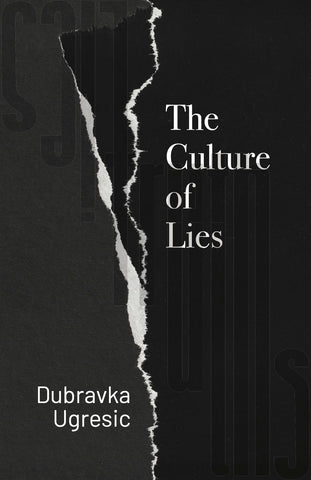
    <author-bio>Dubravka Ugresic is the author of several works of fiction, including &lt;i&gt;The Museum of Unconditional Surrender&lt;/i&gt; and &lt;i&gt;The Ministry of Pain&lt;/i&gt;, and several essay collections, most recently &lt;i&gt;Thank You for Not Reading&lt;/i&gt;. In 1991, when war broke out in the former Yugoslavia, Ugresic took a firm anti-nationalistic stand and was proclaimed a "traitor," a "public enemy," and a "witch," and was exposed to harsh and persistent media harassment. As a result, she left Croatia in 1993 and currently lives in Amsterdam.</author-bio>
    <author-photo>/images/dubravka_ugresic.jpg</author-photo>
    <created-at type="datetime">2008-03-14T12:25:43-07:00</created-at>
    <first-name>Dubravka</first-name>
    <id type="integer">1</id>
    <last-name>Ugresic</last-name>
    <name-for-images>ugresic</name-for-images>
    <updated-at type="datetime">2008-03-18T17:34:43-07:00</updated-at>
  </author>
  <author>
    <author-bio>Jorge Volpi is a doctor in law and a teacher of Mexican literature at the UNAM (Autonomous University of Mexico), as well as a PhD in Hispanic Philology by the University of Salamanca. The author of nine novels, including &lt;em&gt;In Search of Klingsor&lt;/em&gt;, for which he won the Spanish Premio Biblioteca Breve prize and the French Deux-Oc&amp;eacute;ans-Grizane-Cavour Prize, Volpi is one of the founders of the &lt;a href="http://www.dalkeyarchive.com/article/show/210"&gt;"Crack" group&lt;/a&gt;&amp;mdash;a Mexican literary movement that seeks to move beyond magical realism and mimics the ideals of the 1968 Latin American literary Boom. He has received grants from the John S. Guggenheim Foundation and is presently a member of National System of Creators in Mexico. </author-bio>
    <author-photo>/images/jorge_volpi.jpg</author-photo>
    <created-at type="datetime">2009-05-11T15:03:09-07:00</created-at>
    <first-name>Jorge</first-name>
    <id type="integer">14</id>
    <last-name>Volpi</last-name>
    <name-for-images>volpi</name-for-images>
    <updated-at type="datetime">2009-10-20T12:46:17-07:00</updated-at>
  </author>
  <author>
    <author-bio>Ingrid Winterbach is an artist and novelist whose work has won South Africa&#8217;s M-Net Prize, Old Mutual Literary Prize, the University of Johannesburg Prize for Creative Writing, and the W.A. Hofmeyr Prize. &lt;em&gt;To Hell with Cronj&amp;eacute;&lt;/em&gt; won the 2004 Hertzog Prize, an honor she shares with the novelists Breyten Breytenbach and Etienne Leroux.</author-bio>
    <author-photo>/images/ingrid_winterbach.jpg</author-photo>
    <created-at type="datetime">2009-12-21T13:26:04-08:00</created-at>
    <first-name>Ingrid</first-name>
    <id type="integer">20</id>
    <last-name>Winterbach</last-name>
    <name-for-images>winterbach</name-for-images>
    <updated-at type="datetime">2010-01-07T12:17:45-08:00</updated-at>
  </author>
  <author>
    <author-bio>Words without Borders is a nonprofit organization with an online magazine featuring works in translation from around the world. 
Each month it publishes a new "themed" issue that focuses either on a place or topic, and highlights some of the most interesting contemporary writing. The editors of Words without Borders have been involved in the publication of two other international anthologies: &lt;em&gt;Literature from the "Axis of Evil"&lt;/em&gt; (New Press, 2006) and &lt;em&gt;Words without Borders: The World through the Eyes of Writers&lt;/em&gt; (Anchor Books, 2007). More information is available at &lt;a href="http://www.wordswithoutborders.org"&gt;wordswithoutborders.org&lt;/a&gt;. </author-bio>
    <author-photo>/images/words_withoutborders.jpg</author-photo>
    <created-at type="datetime">2009-06-15T06:58:21-07:00</created-at>
    <first-name>Words</first-name>
    <id type="integer">18</id>
    <last-name>Without Borders</last-name>
    <name-for-images>withoutborders</name-for-images>
    <updated-at type="datetime">2009-06-18T12:16:14-07:00</updated-at>
  </author>
  <author>
    <author-bio>Alejandro Zambra is acclaimed as the greatest writer of Chile&#8217;s younger generation. He is a poet and critic and currently teaches literature at the Diego Portales University in Santiago. His first novel, &lt;em&gt;Bonsai&lt;/em&gt;, was awarded Chile&#8217;s Literary Critics&#8217; Award for Best Novel, and the English translation by Carolina De Robertis (Melville House, 2008) was a finalist for the Best Translated Book Award.</author-bio>
    <author-photo>/images/alejandro_zambra.jpg</author-photo>
    <created-at type="datetime">2009-12-21T13:37:27-08:00</created-at>
    <first-name>Alejandro</first-name>
    <id type="integer">22</id>
    <last-name>Zambra</last-name>
    <name-for-images>zambra</name-for-images>
    <updated-at type="datetime">2009-12-21T13:37:27-08:00</updated-at>
  </author>
</authors>